
Planning a Fleet Consolidation? Start With Your Processes, Not Your Vehicles
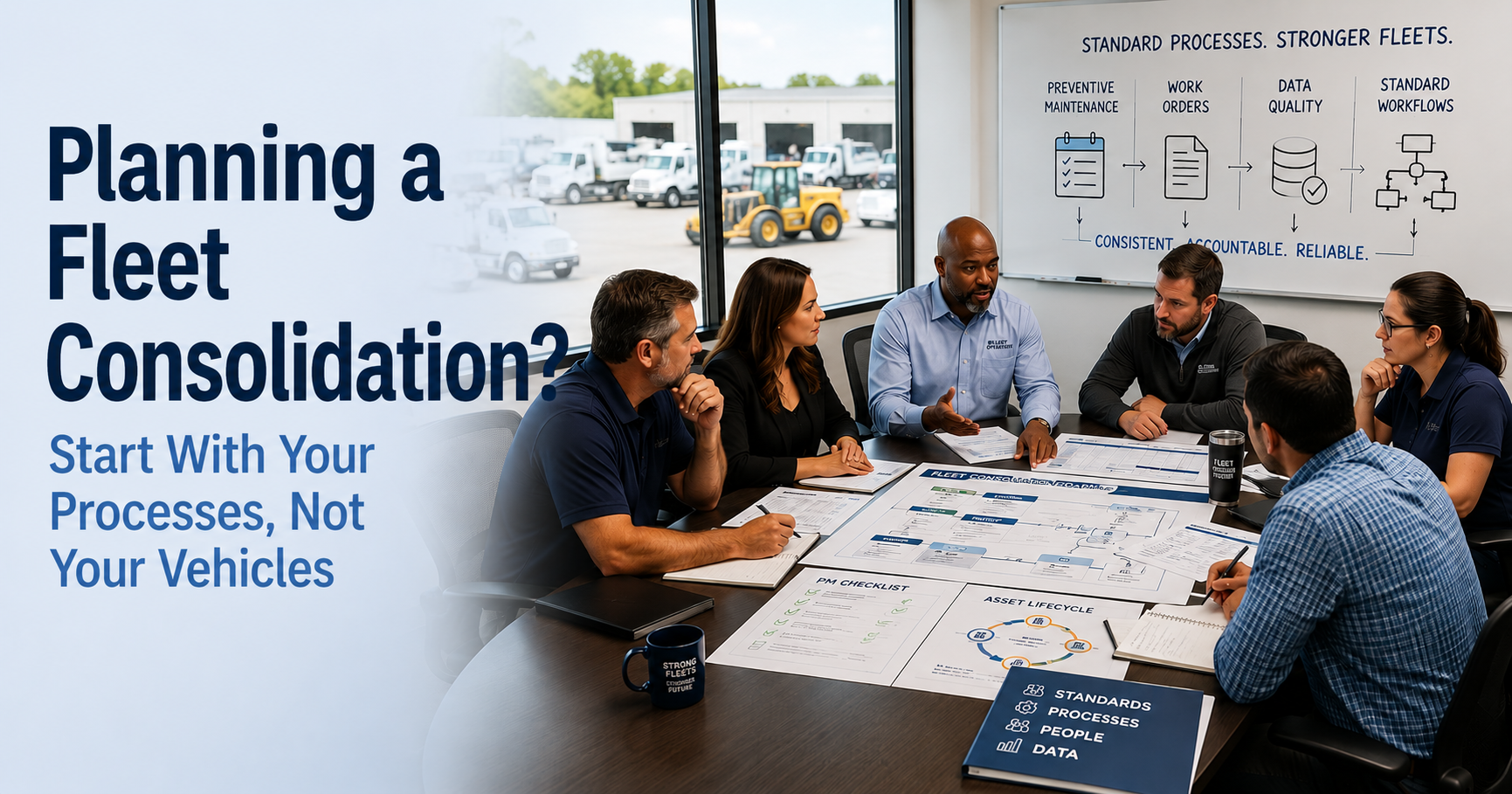
I've talked with quite a few fleet leaders who've gone through consolidation projects, and the conversations usually end up in the same place.
Very few of the challenges had anything to do with the vehicles.
The real work started when different departments had to agree on how the fleet was going to operate moving forward.
On paper, consolidation sounds simple enough. Bring the assets together, standardize maintenance, combine budgets, and move everyone into the same fleet management system.
Then the conversations start.
Public Works has one way of scheduling preventive maintenance.
Transit has another.
Utilities documents repairs differently than everyone else.
Nobody has been doing it "wrong." They've been doing what worked for their operation.
That's what makes consolidation both challenging and worthwhile. You're bringing together years of experience, habits, and expectations, and asking everyone to build one operation together.
Technology Won't Fix Operational Chaos
One of the first questions organizations usually ask is, "Which software are we going to use?"
It's a fair question.
I've also seen organizations spend months evaluating software before anyone agreed on something as basic as what a completed preventive maintenance service should include.
That creates problems later.
If every department has a different definition of preventive maintenance, different inspection practices, or different expectations for documenting repairs, a new fleet management system won't solve those differences.
The software will simply reflect them.
Before talking about dashboards or reports, get everyone around the table and answer a few practical questions.
- What should every preventive maintenance service include?
- When do we replace an asset?
- What information belongs on every work order?
- How do we expect technicians to document repairs?
Those conversations aren't always easy, but they're the ones that make everything that follows much smoother.
You're Not Combining Fleets. You're Combining Habits.
This is where leadership becomes so important.
Every department has a reason for doing things the way they do.
Public Works isn't trying to be difficult.
Transit isn't trying to be different.
Those processes were built over time to solve the challenges each group faced.
If we skip over that reality, the conversation quickly turns into whose process is "right."
That's usually the wrong conversation.
A better question is, "What process will help the entire organization operate consistently?"
Once everyone starts working toward the same goal, it's much easier to build standards the entire team can support.
Bad Data Doesn't Get Better Just Because It's in One Place
One fleet leader I spoke with described a statewide consolidation as "a case study in how not to consolidate a fleet."
The decision itself wasn't the issue.
The timeline was.
Thousands of vehicles were brought together in just a few months. Along with them came different maintenance histories, duplicate asset records, inconsistent fueling information, and years of data that had never been reviewed.
It took a long time to sort through those issues.
I've seen similar situations on a much smaller scale.
Moving information into a new system doesn't improve the quality of the information. Missing service history is still missing. Duplicate asset numbers are still duplicates. Incomplete records still need attention.
Cleaning up data isn't glamorous work, but it's some of the most valuable work you'll do during a consolidation.
The more confidence everyone has in the information, the easier it becomes to make good decisions after the transition.
Change Management Starts With Communication
People often say employees resist change.
I don't think that's the whole story.
Most people want the organization to succeed.
What they want to know is how the changes affect their work.
Who's making decisions now?
Will expectations be different?
How will success be measured?
Those are fair questions.
I've found that people are much more willing to support new processes when they understand why those changes are being made and have an opportunity to be part of the conversation.
Measure More Than Cost Savings
Cost savings usually get the headlines.
They're important, but they shouldn't be the only way we measure success.
After the dust settles, ask yourself a few different questions.
- Are preventive maintenance schedules more consistent than they were before?
- Is vehicle availability improving?
- Can leadership trust the reports they're reviewing?
- Are technicians following the same standards regardless of department?
- Have we reduced the number of operational blind spots across the organization?
Those answers tell you much more about the health of the organization than a single budget number ever will.
Don't Let Software Become the Strategy
Fleet management software plays an important role in any consolidation.
I've seen good software support great fleet operations.
I've also seen organizations expect software to solve problems that really belonged to people or processes.
Clear documentation.
Standard workflows.
Reliable data.
Defined responsibilities.
Those pieces need to come first.
Once they're in place, the software becomes a tool that reinforces good habits instead of documenting inconsistent ones.
If your organization is talking about consolidation this year, spend a little less time asking which software you'll use and a little more time asking how the work should get done. Once everyone can answer that question the same way, every other decision becomes easier.
Key Takeaways
- Treat fleet consolidation as an organizational change initiative that starts with people and processes.
- Agree on maintenance standards, documentation, and workflows before implementing new technology.
- Clean and validate fleet data before migrating information into a new system.
- Measure success through operational consistency, accountability, vehicle availability, and data quality alongside financial performance.
- Keep communication at the center of the project so employees understand both the changes and the reasons behind them.
Frequently Asked Questions
What is fleet consolidation?
Fleet consolidation is the process of bringing multiple fleet operations, departments, or organizations under a centralized management structure with standardized maintenance, reporting, budgeting, and operational practices.
What's the biggest mistake organizations make during fleet consolidation?
One of the most common mistakes is implementing new technology before agreeing on how the work should be done. When maintenance practices, documentation, and reporting vary between departments, those differences carry over into the new system and create extra work later.
Why is data cleanup so important during consolidation?
Maintenance histories, asset records, and operational data often vary between departments. Cleaning and validating that information before migration improves reporting, strengthens decision-making, and gives everyone greater confidence in the data after the consolidation is complete.
How should success be measured after a fleet consolidation?
Financial savings are only part of the picture. Organizations should also evaluate preventive maintenance compliance, vehicle availability, reporting consistency, data quality, technician productivity, and whether leaders have the information they need to make confident fleet decisions.
This article was inspired by a recent episode of our podcast. Check out the full episode for even more tips and tricks: