
Fleet Management vs. Fleet Maintenance: What’s the Difference?
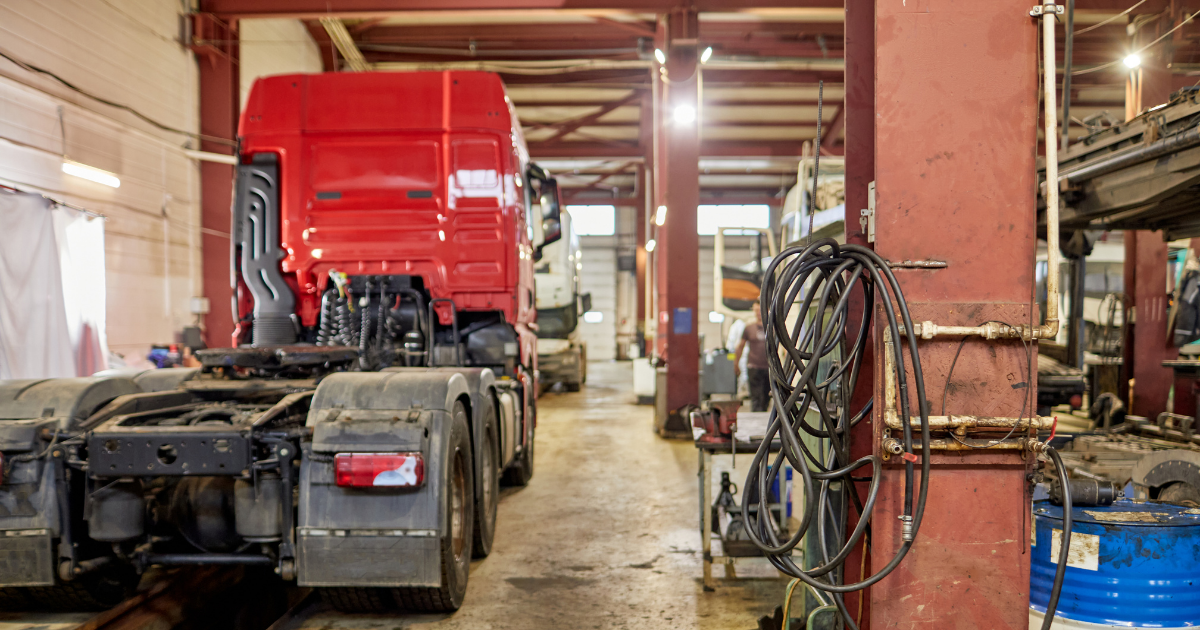
Fleet maintenance keeps vehicles and equipment safe, reliable, and ready for service. Fleet management is responsible for the bigger picture: making sure the organization has the right assets, manages them effectively throughout their lifecycle, understands what they cost, and replaces them at the right time.
Here’s where that distinction gets important:
You can have a well-run maintenance shop without having a well-managed fleet.
RTA Fleet Consultant Nathan Schaefer has seen it firsthand. Nathan started his fleet career as a technician before moving into fleet management and eventually managing both private and government fleets.
During a recent episode of The Fleet Success Show, he described a structure that’ll sound familiar to many public fleet professionals: There’s a shop supervisor managing technicians, preventive maintenance, repairs, and day-to-day operations, but there’s no dedicated fleet management professional overseeing the operation as a whole.
The vehicles are being maintained.
But who’s managing the fleet?
What is fleet maintenance?
Fleet maintenance covers the work required to keep vehicles and equipment safe, reliable, and available.
Depending on the operation, that can include:
- Preventive maintenance
- Inspections
- Diagnostics and repairs
- Work order management
- Parts and inventory
- Technician scheduling and productivity
- Warranty and recall work
- Maintenance history and recordkeeping
For an in-house public fleet, much of this work happens in and around the shop.
A sanitation truck comes in for a PM. An inspection identifies a brake issue. A police vehicle needs an unexpected repair. A technician needs a part that isn't currently on the shelf.
The maintenance operation has to coordinate that work and get those assets safely back into service.
And asset availability matters. When public fleet vehicles aren't available, the impact can extend to the services the community depends on.
What is fleet management?
Fleet management takes a broader view of the operation and the lifecycle of its assets.
It includes maintenance, but it also addresses questions that extend well beyond today's work orders:
- What assets does the organization need?
- How should those assets be specified?
- When should they be replaced?
- How much are they costing the organization?
- Are they being used effectively?
- What should the organization budget for future fleet needs?
- Where are the fleet's biggest operational and financial risks?
- How is the fleet performing?
- Can leadership understand and defend the decisions being made?
Government Fleet describes vehicle lifecycle management as managing the costs associated with providing and operating a vehicle from acquisition through disposal. Maintenance and repair are important pieces of that lifecycle, along with acquisition, fuel, administration, downtime, and eventual disposal.
Fleet management has to connect those pieces.
Fleet management vs. fleet maintenance
The easiest way to understand the difference is to look at the decisions each function is responsible for.
| Area | Fleet Maintenance | Fleet Management |
|---|---|---|
| Primary responsibility | Keep assets safe, reliable, and available | Manage fleet assets and resources across their lifecycle |
| Maintenance and repair | Plans and executes PMs, inspections, diagnostics, and repairs | Uses maintenance performance and history to inform broader fleet decisions |
| Asset lifecycle | Supports asset reliability throughout its service life | Coordinates decisions from specification and acquisition through replacement |
| Replacement | Provides condition, repair, downtime, and maintenance history | Combines fleet data and operational needs to develop replacement recommendations |
| Costs | Tracks and manages maintenance-related resources and costs | Evaluates costs across the fleet to support budgeting and lifecycle decisions |
| Specifications | Provides technical and maintenance input | Coordinates fleet expertise with department requirements and organization-wide standards |
| Performance | Monitors shop performance, PMs, repairs, parts, and technician activity | Evaluates overall fleet performance, availability, costs, resources, and risk |
| Planning | Plans for maintenance capacity and operational needs | Plans for long-term asset, budget, resource, and organizational needs |
These responsibilities will overlap, especially in smaller fleets where one person may wear several hats.
The important question isn't what everyone's title says.
It's whether someone has clear responsibility for managing the fleet as a whole.
You can maintain a fleet without actually managing it
This is where Marc Canton and Nathan Schaefer drew an important distinction during their Fleet Success Show conversation.
Nathan described operations where a shop supervisor reports to an assistant Public Works director or another leader, with no true fleet management professional overseeing the complete operation.
Marc's response was simple: What you have in that situation may be a fleet maintenance organization rather than a complete fleet management organization.
Why does that matter?
Because the work outside the shop still has to happen.
-
Someone needs to decide what the organization buys.
-
Someone needs to develop and review specifications.
-
Someone needs to look across departments for opportunities to standardize equipment.
-
Someone needs to understand whether assets are being used effectively.
-
Someone needs to establish a replacement strategy.
-
Someone needs to forecast future fleet needs.
-
And someone needs to explain fleet performance, costs, risks, and resource needs to leadership.
When ownership of those responsibilities is unclear, individual departments often begin filling the gaps themselves.
What happens when fleet management is fragmented?
The consequences can show up in purchasing, replacement planning, costs, and long-term decision-making.
Departments start making fleet decisions independently
The departments using vehicles and equipment know their operational needs better than anyone. Their input is essential when an asset is being purchased or specified.
Fleet professionals bring a different set of expertise to that decision.
They know what the maintenance history is telling them. They can identify opportunities for standardization. They understand the support requirements that come with different equipment. They can consider how a purchasing decision will affect the asset throughout its service life.
Marc and Nathan discussed what can happen when nobody has that fleet-wide responsibility: departments may end up buying what they want because there isn't a fleet professional coordinating the process.
Over time, that can make the fleet more difficult and expensive to support.
Vehicle replacement becomes a negotiation
Marc made another distinction during the episode: In organizations without strong fleet management, replacement can become more of a negotiation than an economic exercise.
One department believes it deserves a replacement. Another has an equally urgent request. Everyone has a reason their equipment should come first.
A fleet management function gives the organization a consistent way to evaluate those requests.
Age matters, but so do maintenance history, condition, utilization, costs, mission requirements, and other factors specific to the operation.
The maintenance team supplies much of the information needed to make that decision.
Fleet management puts the information into context and develops a recommendation leadership can understand and defend.
Nobody has the complete cost picture
Knowing what the shop spent repairing a vehicle is valuable.
Fleet leaders also need to understand what that maintenance history means for the asset's future.
-
How often is it coming into the shop?
-
Are repair costs trending upward?
-
How much downtime is it generating?
-
Is it still meeting the department's needs?
-
When is its planned replacement?
-
How will that replacement affect future budgets?
Those questions cross the line between maintaining an asset and managing its lifecycle.
Today's work crowds out tomorrow's needs
Maintenance teams deal with immediate operational pressure every day.
Vehicles need to get back into service. Technicians need work assigned. Parts have to be available. PMs can't be ignored.
Meanwhile, somebody still needs to be looking ahead.
What assets will need replacement over the next several years? Will the fleet have enough technicians? Are shop processes keeping up with the operation? Where will budget pressure emerge? What risks need leadership's attention?
Without clear ownership of long-term fleet management, those questions can remain unanswered while everyone handles the next urgent problem.
How do you know if you have a complete fleet management organization?
Job titles aren't a reliable test. Organizational structures vary too much.
Instead, ask five questions:
- Who owns the entire lifecycle of the organization's fleet assets?
- Who coordinates what gets purchased and how assets are specified?
- Who owns the replacement strategy and can explain why one asset should be replaced before another?
- Who can give leadership a clear picture of fleet-wide costs, performance, risks, and future needs?
- Who is accountable for the fleet's long-term strategy?
If those questions all have clear answers, you've probably established meaningful fleet management responsibility.
If the answers point to several departments, aren't clearly defined, or amount to "nobody," there's likely a management gap worth addressing.
The shop is also one of fleet management's best sources of information
The distinction between maintenance and management doesn't mean the two should operate separately.
Quite the opposite.
Some of the best information a fleet leader has comes directly from the maintenance operation.
Work orders build an asset's repair history.
PM records show whether scheduled maintenance is being completed.
Inspections identify emerging maintenance needs and risk.
Parts data can expose stockouts and delays.
Technician data helps leaders understand shop workload and capacity.
Maintenance costs help inform replacement planning.
A single repair tells you what happened to an asset today. Its complete maintenance history helps you understand what's been happening over time.
That information becomes much more valuable when fleet leaders can connect it with the rest of the operation.
Fleet management requires visibility beyond the shop
Public fleet leaders are expected to make decisions about budgets, assets, staffing, replacement, maintenance, and risk. They're also expected to explain those decisions to finance teams, administrators, elected officials, and other stakeholders.
That becomes difficult when the information needed to run the fleet lives in separate spreadsheets, paper records, disconnected systems, or individual departments.
A fleet management information system, or FMIS, can bring that information together so the work happening every day becomes useful for longer-term decision-making.
That's the philosophy behind RTA Fleet360.
Fleet360 is built specifically for public-sector and in-house fleets, bringing asset and lifecycle management together with work orders, PMs, inspections, parts and inventory, technician workflows, budgeting, and reporting.
The goal is to give fleet leaders a clear picture of what's happening across the operation, so they can make decisions with real information behind them and confidently explain those decisions to leadership.
Fleet management and fleet maintenance need each other
A fleet can't succeed for long without effective maintenance.
Vehicles and equipment need to be inspected, serviced, repaired, and returned to operation efficiently. The shop plays a direct role in keeping essential services running.
But a successful shop doesn't automatically mean the entire fleet is being managed effectively.
Someone still has to connect today's maintenance activity with tomorrow's asset, budget, replacement, and resource decisions.
That's fleet management.
And if your organization isn't sure who owns those decisions, there's a useful question to start with:
Are we managing our fleet, or are we only maintaining it?
Frequently asked questions
Is fleet maintenance part of fleet management?
Yes. Fleet maintenance is a core part of fleet management. It focuses on keeping vehicles and equipment safe, reliable, and available. Fleet management uses maintenance information alongside asset, cost, utilization, budget, and operational data to manage the fleet throughout its lifecycle.
Can a fleet maintenance manager also be a fleet manager?
Yes. In some organizations, especially smaller fleets, one person may oversee both maintenance operations and broader fleet management responsibilities. What's important is that responsibilities such as acquisition, specifications, lifecycle planning, replacement, budgeting, and long-term strategy have clear ownership.
What does a complete fleet management program include?
A complete fleet management program typically addresses asset acquisition and specifications, maintenance, utilization, costs, budgeting, lifecycle and replacement planning, risk, performance reporting, and long-term strategy. The exact responsibilities vary by fleet and organization.
Ready to see beyond the shop?
If you're running an in-house public fleet, the information generated by your maintenance operation should help you make better decisions across the entire asset lifecycle.
RTA Fleet360 brings maintenance, asset, lifecycle, budgeting, and performance information together in one system built specifically for public fleets.
Meet with an RTA fleet expert to see how Fleet360 can help eliminate fleet blind spots and give you a clearer picture of your operation.
This article was inspired by a recent episode of our podcast. Check out the full episode for even more tips and tricks: