

The Ongoing Fleet Debate: In-House or Outsourced Maintenance
Fleet managers are constantly being asked to do more with less. And when budgets tighten or backlogs grow, leadership likes to ask things like, "Wouldn't it be cheaper to just outsource fleet maintenance?"
The short answer? Not always.
The long answer? Outsourcing can work in specific situations, especially in the short term, but in-house maintenance generally delivers better long-term cost control, quality, and asset uptime.
Let's break down the real costs, trade-offs, and strategies to help you choose to right approach for your fleet.
1. In-House Shops Provide Control That Saves Money
When you manage your own shop, you get to control aspects like:
-
Technician productivity
- Repair timelines
- Parts inventory and procurement
- PM compliance schedules
Which, in turn, allows you to:
-
Minimize downtime
- Prioritize safety-critical work
- Standardize (and confirm) repair quality
And when you pair that with a fleet management system like RTA Fleet360, you can track technician efficiency, job status, parts usage and more in real-time so you can make easy, data-driven decisions that optimize costs without sacrificing quality.
2. Outsourcing Can Appear Cheaper, But Usually Isn't
Outsourced maintenance may reduce overhead on paper, but hidden costs can quickly add up, including:
-
Higher hourly labor rates
- Lack of control over turnaround times
- Missed warranty recovery
- Less preventive maintenance
For example, a university fleet in Florida discovered that their vendors charged double the hourly labor rate of their in-house techs, and took much longer to complete repairs, adding more costs than it would to keep it all in-house.
And if you don't have formal written service level agreements (SLAs) in place, you may be overpaying for inconsistent service.
3. Asset Downtime Is Expensive
Whether a vehicle is unavailable for a day or a week (or longer), your organization pays the price in lost productivity, scheduling delays, and possible rental vehicle costs.
When you have an in-house shop, you can:
-
Better prioritize the mission-critical vehicles (like police cruisers or public buses)
- Adjust your staffing needs to meet demand spikes
- Track downtime and identify root causes.
And your vehicle never leaves your yard, so you can monitor the progress and get it back in operation more quickly once the repairs and maintenance is complete.
4. Internal Maintenance Allows for Proactive Service
Consistent preventive maintenance (PM) is essential to a well-run, cost-effective fleet management shop.
With an in-house shop, you can ensure your techs:
-
Follow customized PM schedules and quality guidelines
- Build rapport with drivers and operators
- Spot recurring issues before they become problems
Outsourced vendors are generally reactive, fixing things that are already broken, not preventing breakdowns from happening.
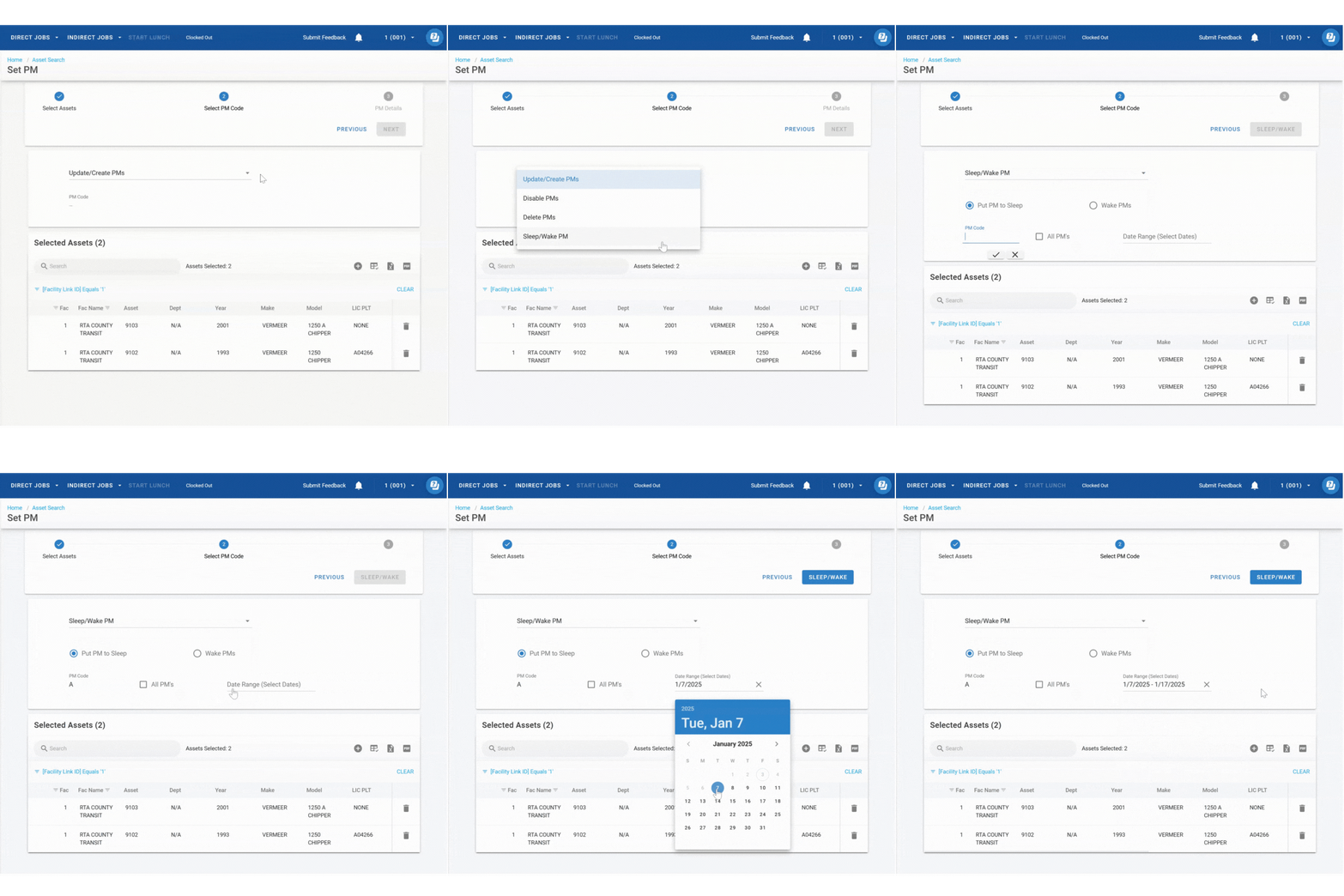
Tools like RTA Fleet360's PM Scheduling feature and inspection tools help ensure no service is ever missed.
5. Mixed Models Can Work, If You Structure Them Right
Some fleets do benefit from a hybrid approach to maintenance:
-
The in-house team handles routine and safety maintenance
- The outsourced team takes on specialty repairs like transmissions and body work
But to succeed in this kind of model, it depends on:
-
Clear service level expectations
- Cost tracking per vendor vs. internal labor
- Shared visibility of work orders
If you're committed to making it work, having a strong structure and plan is essential. Make sure you've got the right software to track everything and provide accurate data and insights you can use to keep everything running smoothly.
6. Internal Maintenance Builds Institutional Knowledge
When you keep maintenance in-house, your technicians become more familiar with:
-
Vehicle history
- Operator behavior
- Equipment quirks
Which means they can:
-
Reduce diagnostic time
- Improve repair quality
- Inform future vehicle purchases.
Plus, with in-house teams, they can support larger fleet goals like sustainability, compliance, and right-sizing.. things your external vendors aren't incentivized to do.
7. Build the Business Case with Data
If your leadership pushes back in favor of outsourcing, bring data to the table, including:
-
Hourly labor rate comparison
- Turnaround time per job
- Downtime impact on operations
- PM compliance trends
A fleet manager was able to increase shop capacity from 15% to 60% simply by building trust and showing data that proved in-house maintenance delivered better results.
And fleet management tools like the BI dashboards and scorecards in RTA Fleet360 can help you further prove that in-house is the right long-term investment.
In-House Maintenance Is a Strategic Advantage
Outsourcing maintenance might seem like an easy win or obvious solution, but it can often lead to higher costs, longer delays, and less visibility into your vehicles.
With a well-run internal maintenance team, your shop:
-
Protects asset uptime
- Improves budget forecasting
- Enable proactive planning
- Builds long-term operational strength
Are you ready to build or optimize your in-house maintenance operation? Make sure you have the right tools in place to give you the best advantage. Schedule a demo of RTA Fleet360 to learn more.
Check out this recent episode of The Fleet Success Show to learn more.